
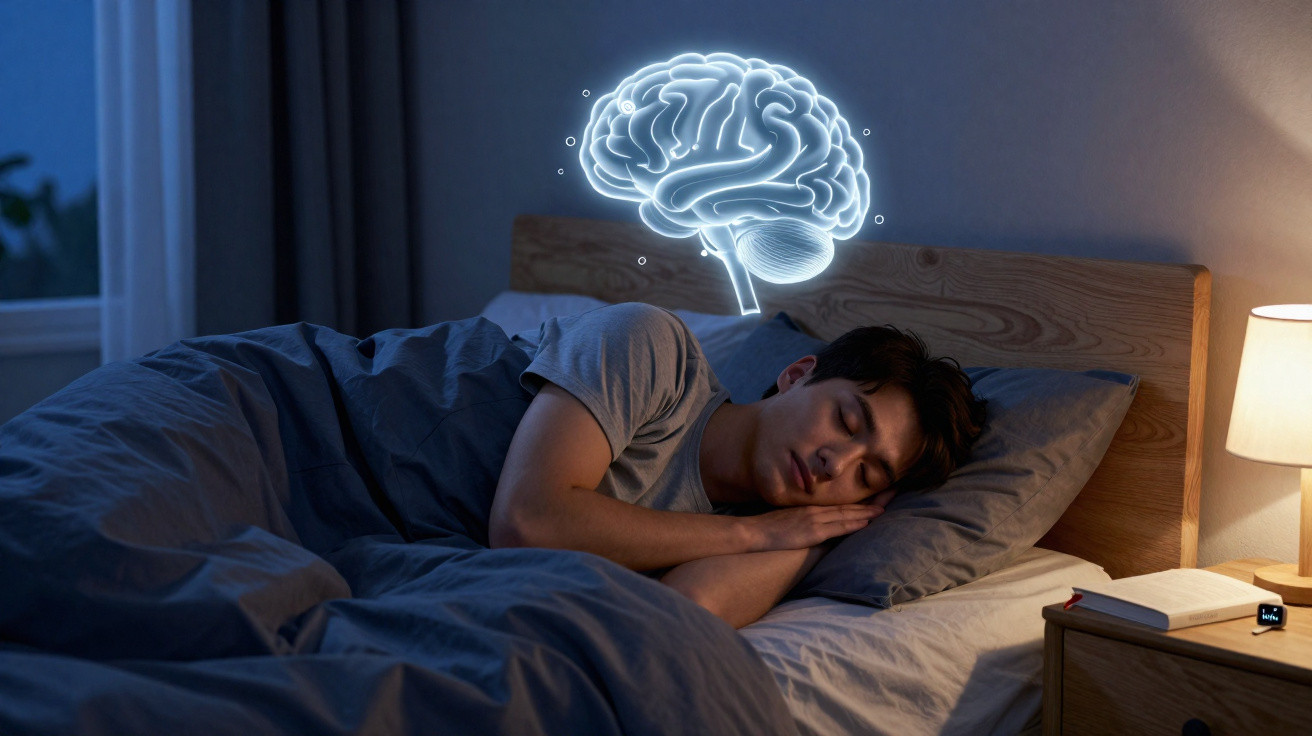
People often say they “slept well” or “didn’t sleep a wink”. Usually, they are unknowingly referring to one particular stage of sleep: deep sleep. It determines whether we can think clearly, feel energetic and remain healthy over the long term the following morning. Yet while most people know the term, few understand what it involves.
What deep sleep actually means
Deep sleep forms part of what is known as non-REM sleep. During this stage, the pulse, breathing and brain activity slow down especially markedly. In a sleep laboratory, characteristic slow waves can be seen on an EEG.
- The body may appear to be “switched off”, but it is intensely busy carrying out repairs.
- This stage occurs mainly during the first third of the night.
- Waking someone at this point is difficult, and many people feel extremely groggy afterwards.
For adults, deep sleep typically accounts for around 15 to 25 percent of a full night’s sleep. The proportion is considerably greater in children, as they are growing more intensively and their brains are processing large amounts of new information.
Anyone who consistently gets too little deep sleep does not simply feel tired – their risk of obesity, diabetes and cardiovascular disease increases.
What happens in the body during deep sleep
From the outside, deep sleep can look like complete stillness. Internally, however, a sophisticated maintenance system is at work.
Cell and tissue repair
During this stage, the body releases increased amounts of growth hormones. Although this may sound like something relevant only to childhood, it is vital for adults too. These hormones help with:
- repairing muscle and connective tissue
- healing after injuries or operations
- producing new proteins within cells
Athletes notice the difference clearly: those who train hard but get poor-quality or insufficient deep sleep build less muscle and recover more slowly.
The brain’s “night-time washing machine”
Current research suggests that the brain effectively clears itself out during deep sleep. The so-called glymphatic system flushes metabolic waste products from the brain.
This includes protein deposits such as beta-amyloid, which have been linked to neurodegenerative diseases. In this way, deep sleep supports mental fitness over the long term, particularly in later life.
Memory and learning
Information learned during the day initially enters short-term memory. While in deep sleep, the brain has the quiet it needs to organise that information into stable networks.
Factual knowledge and motor sequences in particular – such as a new sporting movement or a keyboard shortcut on a computer – demonstrably benefit from sufficient deep sleep.
Anyone who studies through the night before an exam gives up precisely the sleep stage that stores knowledge permanently.
Why too little deep sleep is such a problem
One short night does not automatically damage your health. However, when deep sleep is lacking for weeks or months, specific consequences begin to accumulate.
Common signs of a deficiency
- Severe tiredness even by mid-morning
- “Brain fog”, difficulty concentrating and forgetfulness
- Irritability and sudden mood swings
- Cravings for sweet or fatty foods
- More frequent infections because the immune system is weakened
Many people notice only these daytime symptoms and blame stress or a vitamin deficiency. In many cases, though, the real cause begins at night in bed.
Long-term health risks
Regularly getting too little deep sleep affects several key systems in the body:
| Area | Possible consequence of persistent deep sleep deficiency |
|---|---|
| Metabolism | increased risk of obesity and type 2 diabetes |
| Cardiovascular system | high blood pressure, greater risk of heart attack and stroke |
| Immune system | more frequent infections, slower recovery |
| Mental health | increased tendency towards depression and anxiety disorders |
Studies show this particularly clearly in people doing shift work or living with chronic stress: less deep sleep is associated with more illness, often years before symptoms are formally diagnosed.
How to get more deep sleep
The good news is that many measures that benefit deep sleep can be put into practice without medication. The key is to give the body dependable signals.
Regular sleep times and an evening routine
People are creatures of habit. Going to bed at very different times each day disrupts the body clock. Keeping a sleep-wake pattern as consistent as possible helps the transition into deep sleep.
Helpful measures include:
- setting a regular bedtime, including at weekends with only a small variation
- following a calming evening routine, without work emails or social media during the final hour
- using dim lighting and limiting bright blue light from screens as much as possible
Temperature, light and noise in the bedroom
The body needs its temperature to drop slightly in order to enter deep sleep more easily. A relatively cool bedroom between 16 and 19 degrees supports this process.
Disturbances such as traffic noise or flashing standby lights can trigger brief waking responses that we do not remember in the morning. However, they interrupt deep sleep. Blackout blinds, earplugs or a quiet, steady background sound, such as a fan, may help.
Exercise, diet and alcohol
Regular exercise promotes healthy, deep sleep, especially when done during the day or in the early evening. By contrast, a demanding workout immediately before bed keeps many people awake.
The stomach also plays a part: a very late, heavy meal places demands on the body overnight. Alcohol may help you fall asleep quickly, but it reduces the amount of deep sleep in particular and can lead to a restless night with frequent waking.
Anyone who believes a glass of wine helps them settle more quickly often pays for it with significantly poorer sleep quality.
When it makes sense to see a doctor
Sleeping badly from time to time is normal. But anyone who feels exhausted for weeks despite spending enough time in bed should look into the issue more closely.
Warning signs include:
- loud, irregular snoring with pauses in breathing
- frequent, sudden waking during the night
- severe daytime sleepiness or microsleeps while driving
- reduced performance at work or school
In such cases, sleep specialists at dedicated centres can investigate whether sleep apnoea or other disorders are present. Treatment can then be targeted, and the depth of sleep often returns.
How technology and modern working life affect deep sleep
Bedroom brightness from streetlights, constant availability, shift work and streaming late into the night all push the natural rhythm out of line. Many fitness trackers and smartwatches claim to measure deep sleep accurately. Their data can be interesting, but they are no replacement for professional diagnosis.
These devices can be useful when they reveal patterns: for example, that less deep sleep is recorded after drinking alcohol late at night, or that a regular bedtime improves the graph. What remains most important, however, is how you feel during the day – subjective wellbeing often matters more than any chart.
Why it is worth paying attention to deep sleep
People who see deep sleep as an ally make different daily choices: they avoid scheduling meetings late into the evening, consciously switch off after a late shift and turn the bedroom into a genuine space for rest. Even small adjustments can noticeably increase the share of restorative sleep stages.
Many chronic complaints initially seem to be daytime-only issues: poor concentration, irritability and cravings. Often, they stem from a night in which the body had no opportunity to repair, organise and clear away waste during deep sleep. Recognising this means doing more than reaching for coffee – it means addressing the real cause.





Comments
No comments yet. Be the first to comment!
Leave a Comment