
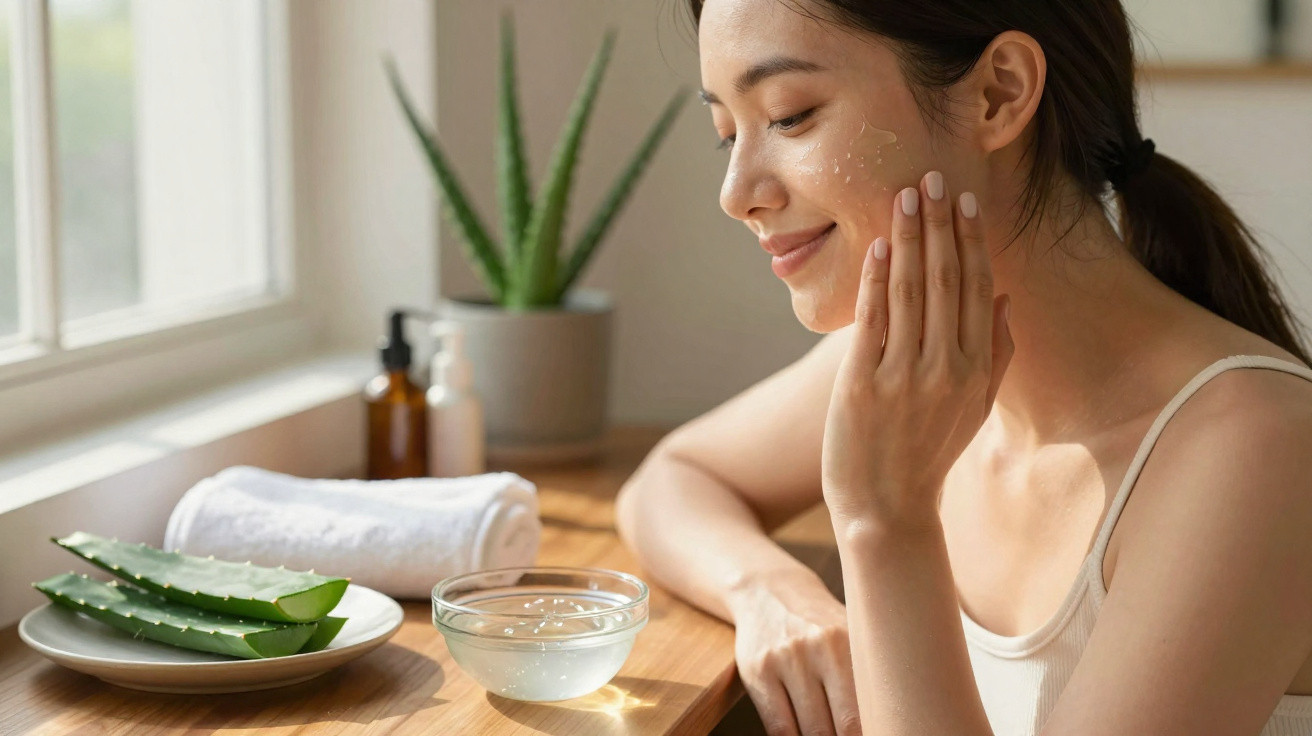
A facial gel with aloe vera is used in skincare routines because of its lightweight texture, cooling feel and ability to hydrate without making the skin overly oily. The plant, also known as aloe, is included in facial care for its soothing, moisturising and refreshing properties, although a patch test is needed before use to prevent irritation on sensitive skin.
Why is aloe vera used on the face?
Aloe vera contains a clear, water-rich gel that can be applied to the skin to ease mild dryness, slight redness and a feeling of heat after sun exposure or friction. Its watery consistency spreads easily, making it suitable for routines that call for weightless hydration.
Most importantly, use only the clear gel found inside the leaf and avoid the yellow layer close to the skin. This part can irritate the skin and should not be included in homemade facial preparations.
How can facial gel with aloe vera be prepared safely?
Start with a thoroughly washed aloe vera leaf, a clean knife and a sanitised container. As a homemade preparation contains no preservatives, it is best to make only a small amount and keep it refrigerated for a short period.
- Trim the sides of the leaf to remove the spines.
- Slice the leaf open lengthways and use a spoon to remove only the clear gel.
- Briefly rinse the gel in filtered water to remove any yellow residue.
- Blend or mash it until the texture is more even.
- Store it in a clean, sealed pot in the fridge for up to a few days.
What is the correct way to apply it to the skin?
Facial gel with aloe vera should be used after cleansing, when the skin is dry and free from make-up residue. Smooth a thin layer over the face, avoiding the eyes, mouth and broken skin, then leave it on for 10 to 15 minutes before rinsing.
Anyone wishing to use it as a light moisturiser can apply a smaller amount and monitor how their skin responds. Stop using it if persistent burning, itching, redness or tingling occurs.
What precautions help prevent irritation and marks?
Although it is natural, aloe vera is not automatically safe for everyone. People with sensitive skin, inflamed acne, dermatitis or allergies should patch-test a small area before applying it across the face, as aloe vera can cause irritation in some people.
- Carry out a patch test on the forearm and wait 24 hours before applying it to the face.
- Do not combine aloe vera with lemon, bicarbonate of soda or alcohol.
- Avoid applying the gel immediately after strong exfoliation or the use of acids.
- Wear sunscreen during the day to help maintain an even skin tone.
- See a dermatologist if new marks, intense burning or flaking develop.
When does aloe vera gel suit a facial routine?
Aloe vera gel works best as an additional step for light hydration, freshness and skin comfort. It may give the skin a more radiant appearance by improving its soft feel, but it does not replace a suitable moisturiser, sunscreen or treatments recommended for acne, melasma and pronounced lines.
In a daily routine, the most balanced result comes from combining gentle cleansing, moderate gel application, moisturising suited to the skin type and sun protection. In this way, aloe vera can help keep the skin barrier comfortable without turning a homemade preparation into a promise of dermatological treatment.





Comments
No comments yet. Be the first to comment!
Leave a Comment