
A mosquito bite causes an uncomfortable inflammatory reaction in the skin. When the insect injects its saliva, the immune system reacts by releasing substances that lead to redness and itching. Taking simple hygiene measures considerably lowers the likelihood of local bacterial complications.
Why does the skin react to a mosquito bite?
Swelling develops because the body recognises components of the saliva as foreign agents. This immune response prompts the release of histamine in the dermis, causing rapid vasodilation. The immediate result is a raised, red area accompanied by persistent itching.
Although the feeling can be very irritating, scratching the affected area should be strictly avoided. Friction from the fingernails weakens the skin barrier and makes it easier for harmful microorganisms to enter. Maintaining the skin’s integrity is essential for recovery.
Why does scratching a mosquito bite increase skin inflammation?
When you scratch irritated skin, the friction triggers an even greater release of histamine in the area… Read more
How does initial washing help soothe the skin?
As soon as you notice a bite, the first step is to clean the site properly under running water. Using a mild soap helps remove remaining biological residue and impurities that have collected on the skin’s surface. This straightforward measure is a practical way to prevent unwanted infections.
As well as removing pathogens, cleansing offers gentle, immediate relief from the burning sensation. Contact with clean water soothes the local nerve receptors, preparing the tissue for the next stages of care. This approach ensures safety when treating the bite at home.
Below is a video from the Mayo Clinic YouTube channel that explores the points discussed in this topic in greater depth:
What is the role of a cold compress in relief?
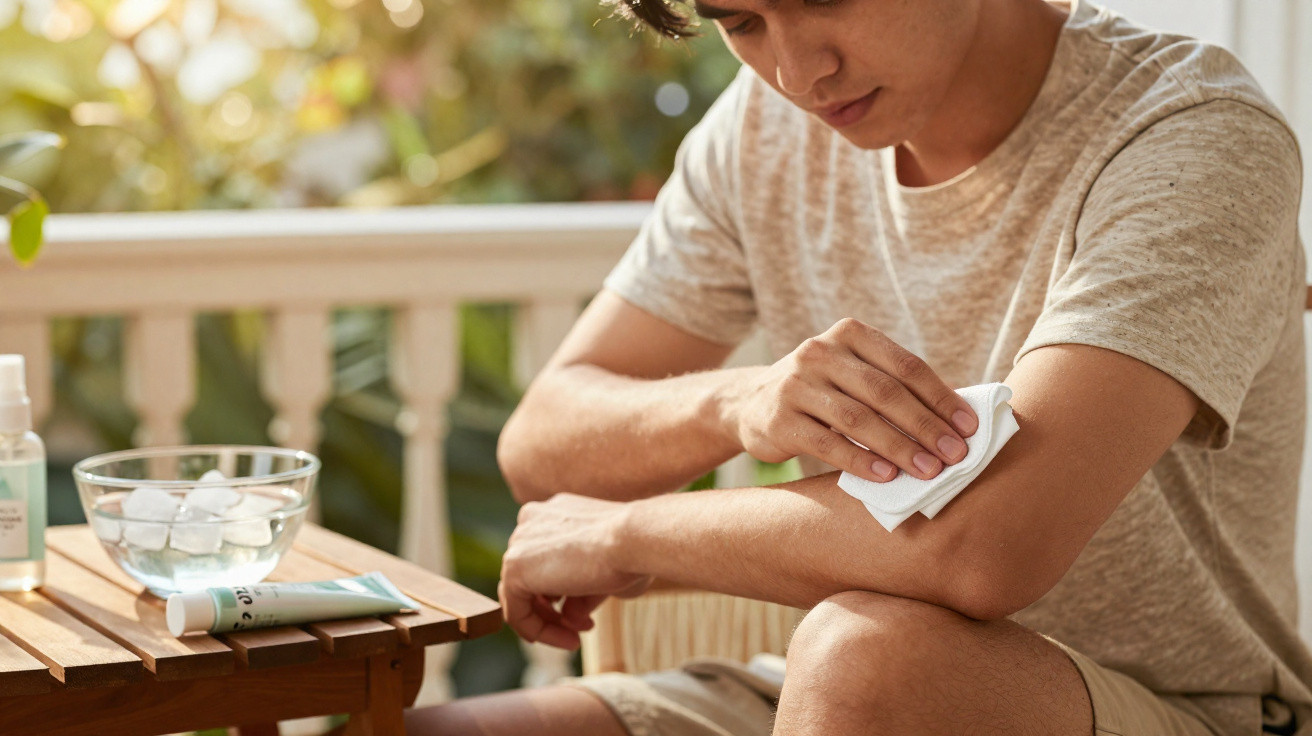
Applying a lower temperature acts as a natural way to limit the local inflammatory response. When a cold compress is placed on the lesion, the blood vessels constrict immediately, reducing circulation in the dermis. This process slows swelling and lessens visible redness.
Keeping the area cool for ten minutes temporarily numbs the nerve endings that send irritation signals to the brain. This mild analgesic effect breaks the urge-to-touch cycle and provides longer-lasting relief. The technique is a highly effective option for comfort.
Essential Post-Bite Kit
Quick Relief Steps
Follow these recommended steps to care for the irritated area:
- Wash the area with running water and mild soap.
- Wrap an ice cube in a clean cloth.
- Apply the compress for ten consecutive minutes.
Why should unproven home mixtures be avoided?
Many people routinely turn to random household ingredients, such as alcohol, vinegar or pastes, hoping to stop the itching. However, applying these substances without medical advice can cause chemical burns or severe contact dermatitis. Such products often worsen existing skin irritation.
Choosing proven physical methods provides a safe intervention without unpleasant adverse reactions. Combining proper hygiene with local cooling reduces discomfort without exposing the body to unnecessary risks. Keeping care simple supports the dermis’s natural regeneration.
See some key recommendations for protecting the affected skin’s integrity:
- Clean your hands before touching the affected area.
- Avoid using ointments without professional advice.
- Keep the area clean and covered in exposed environments.
When should you seek specialist medical help?
Although most bites improve within a few days, it is important to monitor the body’s response. If symptoms such as fever, yellow discharge, intense pain or spreading redness appear, seeking care from a doctor is essential. These signs may indicate serious secondary infections.
In addition, people with a history of severe allergies should remain constantly vigilant after any exposure to insects. Acting promptly with clean, safe measures prevents greater discomfort and protects the health of the skin. Prevention remains the best daily strategy.





Comments
No comments yet. Be the first to comment!
Leave a Comment