
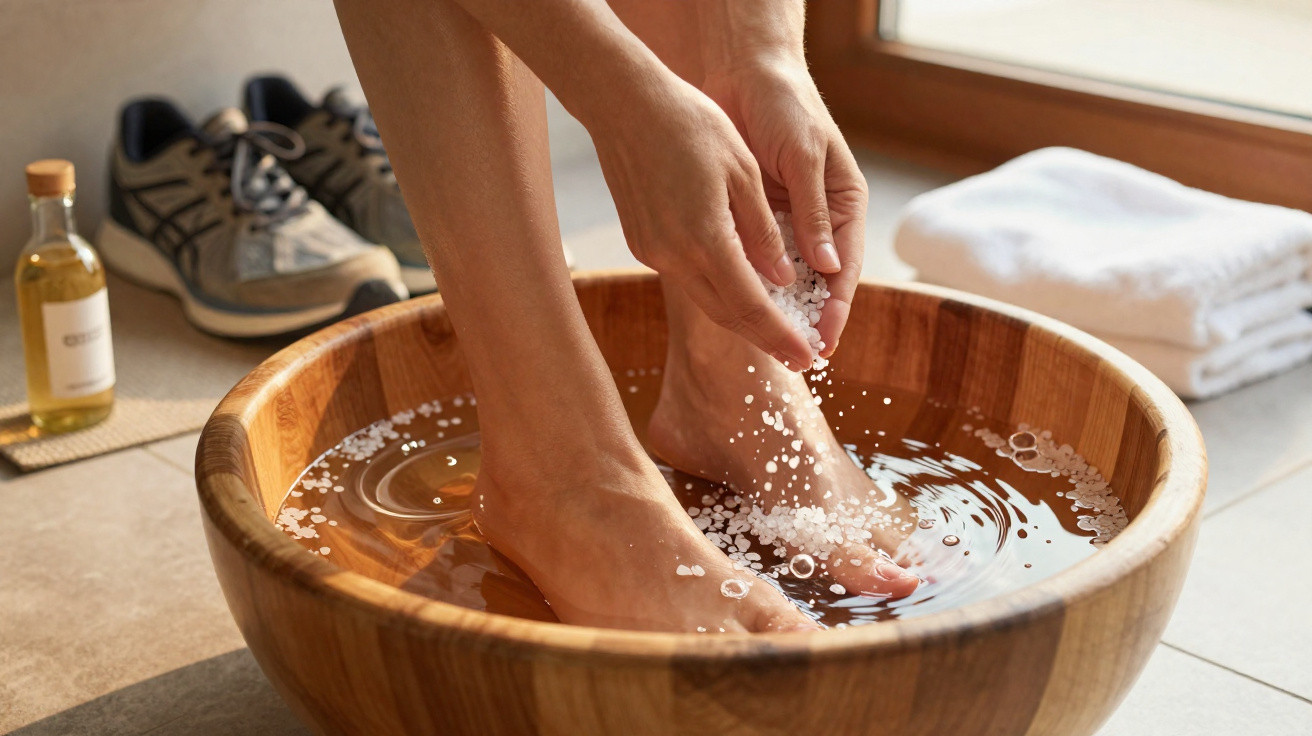
Washing your feet with salt and vinegar is a home-care practice mainly used to temporarily reduce odour, soften the skin and make feet feel more comfortable after spending many hours in closed shoes. Vinegar contains acetic acid, creating an acidic environment that may hinder the growth of certain micro-organisms, but evidence does not support this soak as a proven treatment for athlete’s foot or fungal nail infections.
What is the purpose of adding salt and vinegar to foot-soak water?
Its main practical use is foot hygiene and the short-term management of foot odour. Water helps wash away sweat and debris, while vinegar lowers the pH of the mixture and may alter the conditions in which particular bacteria and fungi grow. Salt can add a sensation of cleanliness and assist with the mechanical removal of superficial skin, but there is no strong evidence that it is needed to produce a meaningful antimicrobial effect.
- It may temporarily lessen odour caused by sweat and micro-organisms.
- Warm water softens the outer layer of skin.
- Vinegar provides acetic acid and makes the soak more acidic.
- The routine may feel relaxing after a day spent wearing closed shoes.
Can vinegar get rid of fungal infections and athlete’s foot?
It should not be regarded as a cure. Acetic acid has activity against some micro-organisms under certain conditions, and vinegar solutions have been reported in dermatological care. However, this does not mean that soaking feet in vinegar can reliably eliminate the fungi that cause athlete’s foot. Reviews indicate that home remedies of this kind have not been assessed in enough high-quality studies to replace established antifungal treatments.
Persistent peeling between the toes, severe itching, cracks or lesions that continue to spread may indicate a fungal infection of the feet. In these circumstances, keeping the skin dry and using a suitable antifungal usually has far stronger evidence behind it than relying solely on home foot soaks.
How can you prepare the soak without irritating the skin?
Vinegar should not be put directly onto the feet undiluted. Since it is acidic, high concentrations or prolonged exposure can lead to stinging, redness and irritation, especially for sensitive skin. Anyone choosing to try the soak purely as a hygiene measure should dilute the solution well, keep contact brief, then rinse and dry their feet thoroughly afterwards, particularly between the toes.
- Use warm water, never very hot water.
- Dilute the vinegar thoroughly rather than applying it straight to the skin.
- Do not rub coarse salt vigorously over sensitive areas.
- Stop immediately if stinging, redness or pain occurs.
- Carefully dry between every toe after the soak.
Who should avoid washing their feet with this mixture?
People with cuts, deep cracks, dermatitis or other open skin lesions should avoid acidic solutions on the area, as contact may cause pain and worsen irritation. Extra caution is also sensible where there is reduced sensation in the feet, as someone may not quickly notice a strong reaction to the mixture.
Anyone with diabetes, circulation problems, neuropathy or a history of foot wounds needs to take particular care before trying homemade remedies. In these cases, even a small injury may have more serious consequences, and any wound, swelling, discharge or persistent change should be professionally assessed rather than treated with improvised home methods.
What genuinely helps prevent foot odour and fungal infections?
Vinegar may be used occasionally, when well diluted, as part of a hygiene routine, but controlling moisture is usually more important. Washing and drying the feet, changing socks daily, replacing wet socks promptly and rotating shoes so that they can dry before being worn again all reduce the damp conditions in which fungi thrive.
For this reason, salt and vinegar are more useful as a homemade cleansing and comfort soak than as a medical treatment. If the issue is only sweat and odour, the routine may offer temporary improvement; if there is itching, peeling, fissures or changes to the nails, identifying the cause and treating it properly matters more than increasing the concentration or frequency of the soak.





Comments
No comments yet. Be the first to comment!
Leave a Comment