
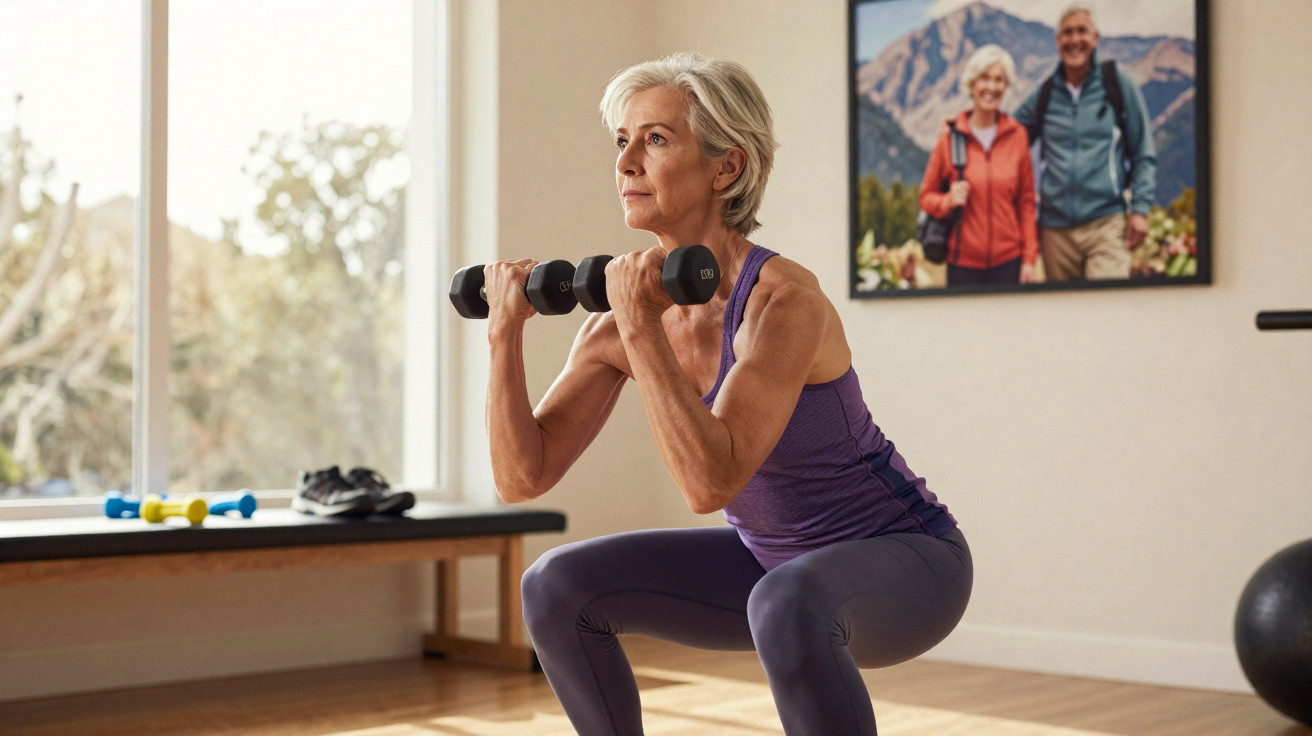
Reaching your 50s or 60s is no reason to give up strength training. On the contrary, as people get older, maintaining muscle becomes directly linked to everyday tasks such as getting up from a chair, carrying shopping, climbing stairs and retaining independence. Trainer Patricia Vera sums up this view by arguing that the more years pass, the less sense it makes to stop strength training. Walking remains important, but it creates different adaptations from those achieved by overcoming resistance.
Why can giving up weights after 50 be a mistake?
From middle age onwards, muscle mass and muscular strength tend to decline gradually, particularly when someone becomes less active. This issue does not necessarily become obvious overnight. It often starts with minor changes: no longer carrying heavy items, always taking the lift, avoiding squatting down or cutting back on activities that previously demanded more from the legs and arms.
When there is less stimulus, muscles have fewer reasons to retain their capacity. Resistance training works in the opposite direction, requiring the body to generate force against a progressively challenging load.
- Helps preserve strength for everyday activities;
- Encourages the maintenance and development of muscle mass;
- Works muscles that matter for climbing stairs and rising from a chair;
- May support bone health when performed regularly;
- Helps maintain functional ability as the years go by.
Does plenty of walking produce the same results?
Not quite. Walking is excellent for increasing physical activity levels and working the cardiorespiratory system, but it does not usually challenge every major muscle group with enough resistance to replace a strength programme. The two forms of activity complement each other rather than compete.
Do you need to lift very heavy weights to benefit?
No. “Doing weights” does not necessarily mean handling extremely heavy barbells in a gym. Resistance can come from dumbbells, machines, resistance bands or bodyweight. The key point is for the exercise to be difficult enough to demand muscular effort and to allow progression as the person adapts.
A well-balanced programme aims to target the main muscle groups and use movements connected to everyday demands. Options include:
- Sitting down and standing up from a chair, or doing adapted squats;
- Performing rowing exercises with a resistance band or machine;
- Doing pushing exercises for the chest and arms;
- Training the calves and hips;
- Carrying weights suited to individual ability;
- Gradually increasing resistance, repetitions or difficulty.
Why can starting at 50 make a difference at 70?
Patricia Vera’s point draws attention to a process that often goes unnoticed. The abilities used at 70 are also shaped by habits maintained during the preceding decades. Muscular strength, balance and power are needed for tasks that may seem ordinary while they remain easy, such as getting up from the floor, carrying a suitcase or reacting quickly after a trip.
- Keeping the legs strong makes it easier to stand up and sit down;
- Training the hips and torso supports functional movements;
- Arm strength helps with carrying objects;
- Progressive exercises allow the muscles to keep being challenged;
- Balance training can complement strength as people age.
After 50, strength is no longer only about appearance
International physical activity recommendations include strengthening exercises for the major muscle groups on at least two days a week for adults. After 65, strength work becomes even more important when combined with balance exercises and other physical activity. This does not mean everyone should lift the same loads: training history, joint limitations, health conditions and fitness levels determine how to start and progress.
The central message is that ageing does not create a point at which strength training stops making sense. In reality, almost the opposite is true. Walking, cycling and staying active remain important for health, but retaining the ability to produce force helps support what many people most want to preserve as the years pass: climbing stairs without needing help, carrying their own shopping, standing up safely and continuing to use their bodies independently for everyday tasks.




Comments
No comments yet. Be the first to comment!
Leave a Comment