
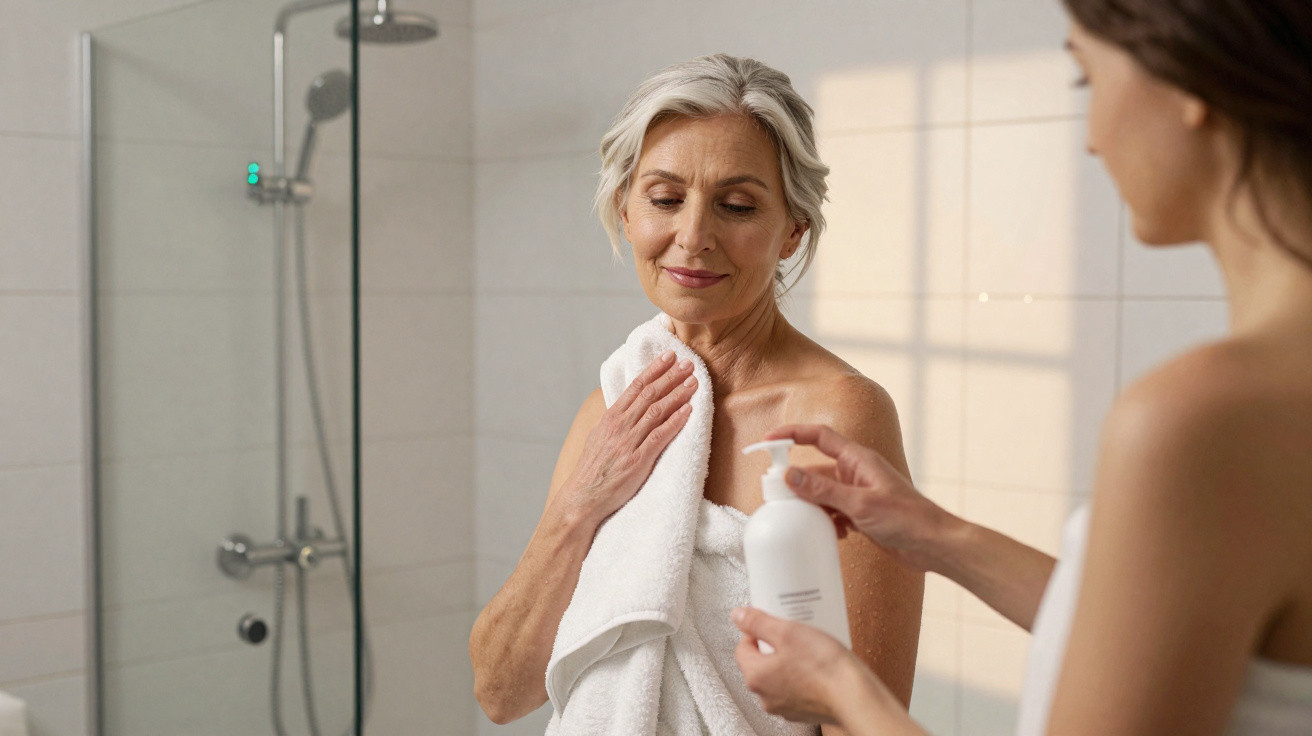
With every birthday, the skin changes noticeably – and anyone who continues showering as they did at 30 risks dry, tight and irritated skin.
Many older people report itching, flaking and an unpleasant feeling of tightness after washing. These symptoms are often not caused by “bad skin”, but by a care routine that simply no longer suits their age. What matters is not only what is applied to the skin, but above all how often it comes into contact with water and shower gel in the first place.
Why skin reacts differently after 60
As we age, the skin becomes thinner, less elastic and far more prone to drying out. The body produces less sebum, meaning fewer natural oils that would normally create a protective layer on the surface. This lipid film retains moisture in the skin and shields it from harmful influences.
From around the age of 60, this protective layer becomes noticeably weaker. Anyone who then takes a hot shower every day and uses heavily foaming products is literally washing away the last remaining oil reserves. The result is rough, cracked skin that reacts sensitively to everything from central-heating air to cleaning products.
Regular, excessively frequent showering can do more harm to older people than a slightly less frequent but skin-friendly washing routine.
In addition, the skin’s natural acid mantle and microbiome – the collection of “good” bacteria – can become unbalanced. These micro-organisms help protect against pathogens and environmental irritants. If they are continually washed away, the skin loses some of its natural defences.
The risks of showering too often
Excessive cleanliness may sound harmless, but it can seriously weaken the skin barrier. Dermatologists repeatedly see similar issues in older people who shower very frequently.
Consequences of an overstressed skin barrier
- Microcracks: Tiny splits in the surface of the skin, often invisible but painful and susceptible to germs.
- Redness and burning: After showering, the skin may feel hot, tight and irritated.
- Itching: Persistent scratching worsens the damage and may encourage inflammation.
- Flaky patches: Skin becomes rough and scaly, particularly on the shins, elbows and hands.
Products containing strong surfactants and with a high or strongly alkaline pH value are particularly problematic. They dissolve oils especially effectively, further drying out skin that is already under strain. Elbows, hands, knees and shins in particular can quickly develop an unpleasantly coarse texture.
Over time, a vicious circle develops: the skin becomes less supple, fine lines appear more pronounced, and even rich creams offer only short-term relief. Many people apply more and more moisturiser, continue showering daily and wonder why the symptoms persist despite their skincare.
How often should people over 60 really shower?
Dermatology professionals are remarkably united on one point: for healthy people over 60, a daily full-body shower is generally unnecessary – and is often detrimental to the skin.
Two to three full showers per week are ideal, combined with targeted washing of selected areas on the remaining days.
This advice naturally applies to people without particular medical conditions or physically demanding work. Those who sweat heavily, exercise a great deal or become very dirty at work need a more individual solution. For a typical retired lifestyle, however, this level is usually entirely sufficient.
What daily personal care means in practice
On days with fewer showers, it is enough to clean certain areas carefully:
- Face
- Armpits
- Genital area and buttock crease
- Feet and between the toes
These areas are more likely to develop odour, sweat and accumulations of germs. A quick wash with lukewarm water and a mild cleanser is sufficient. Arms, back and legs do not need intensive soaping every day.
| Age | Recommended full-body showers per week | Partial wash |
|---|---|---|
| under 40 | 3–7 (depending on activity) | as needed |
| 40–60 | 3–5 | daily in sensitive areas |
| over 60 | 2–3 | daily on armpits, genital area, feet and face |
The table shows that the frequency of full-body washing can decrease with age without compromising personal hygiene. Cleanliness is not determined by the number of litres used in the shower, but by targeted care.
What a skin-friendly shower after 60 looks like
Alongside frequency, the way a person showers determines the condition of their skin. A few straightforward adjustments can already make a noticeable difference.
Water temperature and duration
- Lukewarm rather than hot: Hot water strips skin oils and dilates blood vessels, which encourages redness.
- Keep it brief: Ten minutes is generally more than enough; less is even better.
- Avoid long baths: Hours spent soaking in the bath can remove a great deal of moisture from mature skin.
Choosing the right cleansing products
Soap-free, pH-neutral or slightly acidic washing lotions developed specifically for dry or sensitive skin are ideal. Useful wording to look for includes:
- “pH skin-neutral”
- “sulphate-free” or “mild surfactants”
- “for dry/sensitive skin”
- “replenishing lipids”
Older people are generally better off avoiding rough flannels, firm sponges and body brushes. Skin needs gentle stroking rather than vigorous scrubbing. In most cases, applying lotion with the hand is enough.
Drying and moisturising correctly
After showering, use a soft, absorbent towel. Rather than rubbing, gently pat the skin dry. Rough drying can create tiny tears in skin that is already thinner.
The most important skincare takes place in the three minutes after showering – when the skin is still slightly damp and especially receptive.
During this window, it is worth using rich skincare containing ingredients such as:
- Ceramides, which reinforce the skin’s protective barrier
- Plant oils (such as jojoba, almond or sunflower oil)
- Glycerine or hyaluronic acid, which bind moisture
- Urea in a low concentration, which helps retain water in the skin
There is another point for daytime that many older people underestimate: sun protection. Mature skin responds more sensitively to UV radiation. A day cream with SPF, formulated for older skin, helps protect against age spots and accelerated ageing – even in winter and when the sky is overcast.
When different rules may apply
People with certain medical conditions need routines tailored to their circumstances. Anyone with diabetes, a strong tendency towards eczema, atopic dermatitis or open wounds should always involve a dermatologist. In care homes, the risk of falling in the bathroom must also be considered. In this setting, a slightly less frequent but well-organised shower may be safer than daily manoeuvring in cramped wet rooms.
Very active older adults who do a lot of sport or use the sauna regularly are another exception. Here, the recommendation can be adapted by cleaning sweaty areas specifically and treating the rest of the body as gently as possible – for example, using plain water instead of strong shower gel.
How relatives can approach the subject sensitively
Many older people associate frequent showering with “being presentable” and may feel ashamed when asked to reduce their routine. Relatives and care workers can therefore encounter resistance quickly. It helps to start the conversation with symptoms rather than prohibitions: “Does your skin often itch? Does it sting after showering?”
Explaining that less showering can noticeably improve comfort is usually more likely to encourage a change of mind. Small steps – initially moving from every day to every other day, for example – are more realistic than radical changes.
The aim is not to save water or cut out care routines, but to treat skin after 60 according to what it really is: thinner and more sensitive, yet remarkably resilient with the right routine. Two to three well-planned showers per week, supplemented by sensible partial washing and consistent skincare, are enough in most cases to stay clean, fresh and kind to the skin in everyday life.




Comments
No comments yet. Be the first to comment!
Leave a Comment