
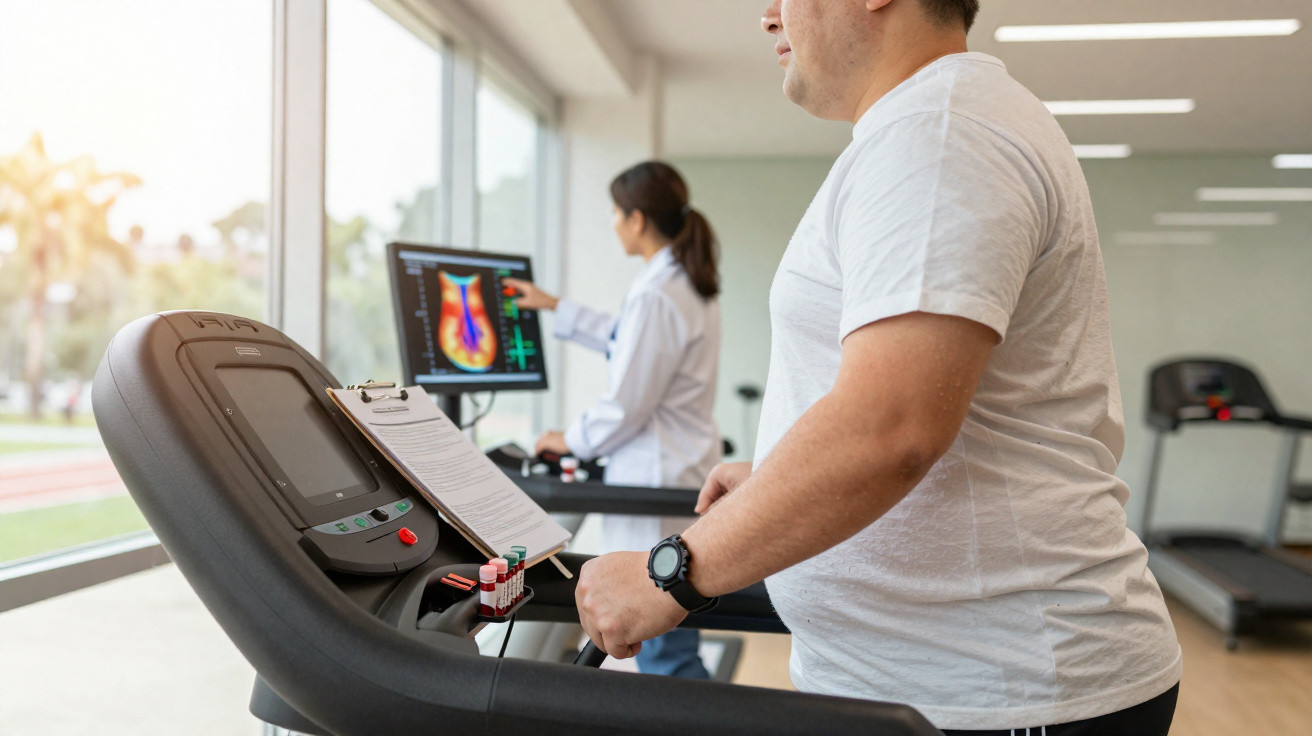
Not all abdominal fat is alike. A small recent study has found that adults who are overweight or obese and have maintained regular exercise for at least two years have healthier characteristics in their belly fat.
Against participants who did not exercise, the people who consistently undertook endurance training had abdominal fat deposits, located between the skin and muscle, with a greater concentration of blood vessels, less collagen associated with metabolic problems, and fewer pro-inflammatory white blood cells.
Together, these features suggest the body is storing abdominal fat in a healthier manner, even where the overall quantity of fat tissue remains unchanged.
Regular exercise and healthier belly fat
"Our findings indicate that in addition to being a means to expend calories, exercising regularly for several months to years seems to modify your fat tissue in ways that allows you to store your body fat more healthfully if or when you do experience some weight gain – as nearly everyone does as we get older," explains kinesiologist and principal investigator Jeffrey Horowitz from the University of Michigan.
The research involved 52 adults classed as overweight or obese when the study was carried out. They were split into two groups: 28 participants who reported no regular exercise, and 24 who said that they exercised.
Members of the exercise group said they performed endurance-based activity at least four times weekly, for a minimum of two years. On average, participants in this group had exercised routinely for the previous 11 years.
Researchers examined abdominal fat tissue samples taken from just under the skin in 32 participants, evenly divided between men and women, who had comparable body-fat percentages. Sixteen samples came from each group.
How endurance exercise changes abdominal fat tissue
Regular exercisers had fat tissue that appeared more capable of storing fat effectively. Alongside increased blood vessel numbers, lower levels of metabolism-disrupting collagen and fewer cells that drive inflammation, their belly fat tissue contained a higher density of mitochondria and metabolism-related proteins.
In additional laboratory work, Horowitz and his team assessed cultured abdominal fat samples collected from a separate sub-cohort within each group.
When these sub-cohorts were compared, the regular exercisers’ isolated belly fat tissue displayed greater blood-vessel growth and a higher ability to store lipids. This may point to improved insulin sensitivity.
Earlier mouse studies have shown that overweight or obese animals can have enlarged abdominal fat cells, potentially leaving fewer blood vessels available to deliver oxygen through the tissue.
By contrast, this new study found that people who exercise consistently have a stronger capacity for oxygen and nutrient delivery through the blood vessels in their fat tissue, despite having enlarged cells themselves.
"Compared with our previous study in which we examined the effects of three months of training on fat tissue, we generally see these differences are more robust in people who exercise regularly for years versus those who don't exercise," explains Horowitz.
Implications for metabolism and inflammation
The results indicate that habitual exercise may reshape both the composition and arrangement of body-fat cells in ways that support metabolic function and may partly reduce inflammation.
While rodent research has suggested exercise could raise the proportion of brown fat, which uses white fat as an energy source, these findings indicate that this is unlikely to happen in humans. Proteins required for that process were not higher among the exercisers.
Every participant in the current study reported their own exercise habits, and the researchers did not account for the specific type of endurance activity performed. Larger studies following participants over longer periods will be required to investigate the findings in more detail.
Nevertheless, these early results suggest that adults who are overweight or obese and exercise regularly are substantially affecting the function and metabolism of their abdominal adipose tissue, and potentially their cardiometabolic health.
The study was published in Nature Metabolism.






Comments
No comments yet. Be the first to comment!
Leave a Comment