
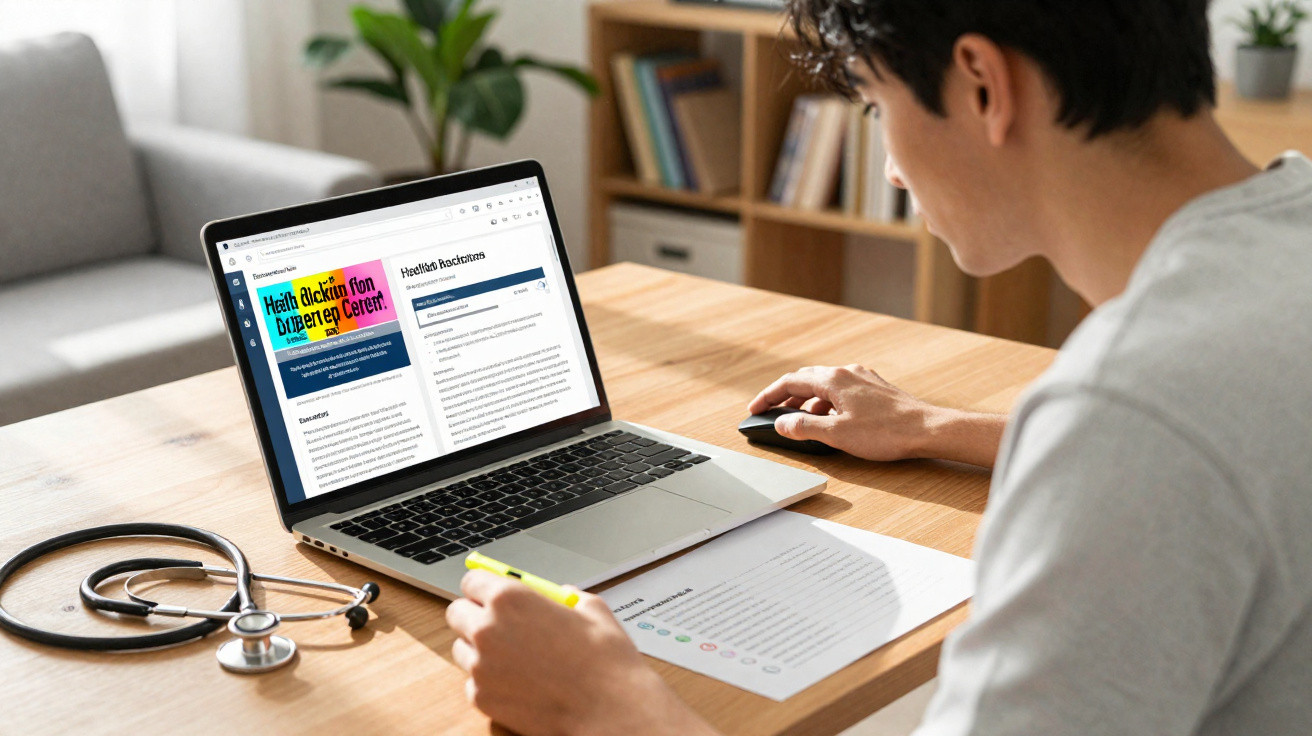
Access to information has never been easier. Knowing who to trust, however, remains difficult. In just a few minutes, an online health search can produce dozens of different answers for the same symptom, treatment or preventive habit. The issue is that not all of them are true and, in many cases, separating facts from opinions or misinformation requires more than an internet search.
The global study “2026 Edelman Trust Barometer Special Report: Trust and Health”, published by the global communications consultancy Edelman, found that 70% of people believe at least one false or scientifically unproven piece of health information. Among Brazilians, only 52% say they trust their own ability to find reliable answers and make decisions about their health.
Against this backdrop, doctors are warning of an increasingly common phenomenon: the infodemic. Defined by an overload of information, whether accurate or not, it makes trustworthy content harder to access and can affect important decisions on prevention, vaccination, diagnosis and treatment.
According to Alexandre Pimenta, doctor and national technical lead at AmorSaúde, a network of clinics partnered with Cartão de TODOS, information remains an important ally for health when it is of good quality. “We are living at a time when we have never had so much access to health information, and this is positive when we use trustworthy sources. The problem arises when we receive hundreds of pieces of information every day, often incomplete, alarmist or contradictory,” he says.
From cyberchondria to misinformation: when can seeking information be harmful?
Looking up symptoms online has become a common habit, often before people seek medical care. Although this practice can help answer questions, searching too much can have the opposite effect: it may heighten anxiety and lead to mistaken interpretations of a person’s own health.
Alexandre Pimenta says this behaviour has become more regularly observed in medical consultations. “We frequently see people who spend hours researching symptoms online and end up convinced that they have serious illnesses. This behaviour is known as cyberchondria, characterised by increased anxiety caused by excessive online searches for medical information,” he says.
The doctor explains that this occurs because the brain tends to focus more closely on information that triggers fear. “Common symptoms, such as headaches, tiredness or abdominal discomfort, can be interpreted as signs of serious illnesses when viewed outside their clinical context. The balance lies in consuming quality information, limiting the time spent researching illnesses and remembering that no content available online replaces an individual medical assessment. Information should reduce doubts, not increase suffering.”
The effects of information overload
The abundance of information has also changed the dynamics of consultations. While many patients once arrived with no knowledge of their condition, it is now common for people to have researched a range of content before their appointment, not always from reliable sources.
“Today, we see many well-informed patients, but also confused patients. They often arrive after watching dozens of videos, following influencers or taking part in social media groups where each person expresses a different opinion,” Alexandre Pimenta explains. In clinical practice, this situation can lead to uncertainty about a diagnosis, resistance to the prescribed treatment, early discontinuation of therapy and a search for so-called “miracle” medicines.
The doctor gives examples of situations that have become frequent in everyday clinical work. “Patients arrive convinced that they have severe food intolerances because they watched videos on social media, when, after proper investigation, we discover that they only have functional bowel changes or unsuitable eating habits,” he notes.
Another example cited by the professional concerns weight-loss medicines. “Many people start or stop treatments based on other people’s accounts, without medical assessment, significantly increasing the risk of adverse effects,” he warns.
The health risks of misinformation
Beyond causing confusion, Alexandre Pimenta says that believing false information can undermine diagnosis and preventive healthcare. “In medicine, time often means prognosis. A patient who delays a cancer diagnosis, for example, may lose an important opportunity for curative treatment,” the doctor warns.
A diagnosis cannot be confirmed solely on the basis of information found online. “It is very common to hear phrases such as: ‘I searched online and thought it was just gastritis’ or ‘I saw a video saying I only needed to take a certain supplement’. The problem is that similar symptoms can represent completely different illnesses,” he adds.
The doctor explains that only a consultation can assess the patient’s full clinical picture. “It is the medical assessment that can bring together clinical history, physical examination, risk factors and further tests when they are genuinely needed. Many people spend weeks or months trying to deal with symptoms on their own when they should have been investigated early. The internet can be excellent for health education, but it must never replace clinical reasoning,” he stresses.
According to the professional, emotional appeal is one of the factors that encourages the spread of false news. “False information often uses emotional language, promises of a ‘definitive cure’ or conspiracy theories that reduce trust in scientific institutions. Science progresses precisely because it continually reviews its evidence. Misinformation, on the other hand, usually offers simple answers to complex problems, which is often a warning sign.”
Among the main health consequences of misinformation, he lists:
- Delaying the diagnosis of potentially serious illnesses;
- Using self-medication inappropriately;
- Stopping treatments with proven effectiveness;
- Using therapies without scientific evidence;
- Increasing the risk of clinical complications;
- Reducing vaccine uptake;
- Encouraging the spread of preventable diseases;
- Postponing medical care after believing self-diagnoses found online;
- Being exposed to adverse effects by starting or stopping medicines without professional guidance;
- Reducing trust in scientific institutions and healthcare professionals, making it harder to follow medical advice.
How to identify and find trustworthy health information
In an environment defined by content overload, knowing where to find trustworthy information has become part of looking after one’s health. Before believing or sharing any guidance, several criteria can help determine whether that content is credible, including:
- Checking whether the content was created by a qualified professional;
- Confirming whether it includes scientific references or recognised medical guidelines;
- Comparing the guidance with information published by trustworthy institutions, such as Brazil’s Ministry of Health (MS), the World Health Organization (WHO), medical societies and universities;
- Being wary of promises of a rapid or guaranteed cure;
- Taking care with content that uses fear or excessive emotion to persuade.
As well as consulting healthcare professionals, people can turn to platforms that bring together content written or reviewed by specialists. “A simple way to identify health fake news is this: when information seems extraordinary, it is worth checking it first with your doctor or consulting trustworthy institutional sources,” Alexandre Pimenta advises.
By Nayara Campos


Comments
No comments yet. Be the first to comment!
Leave a Comment