
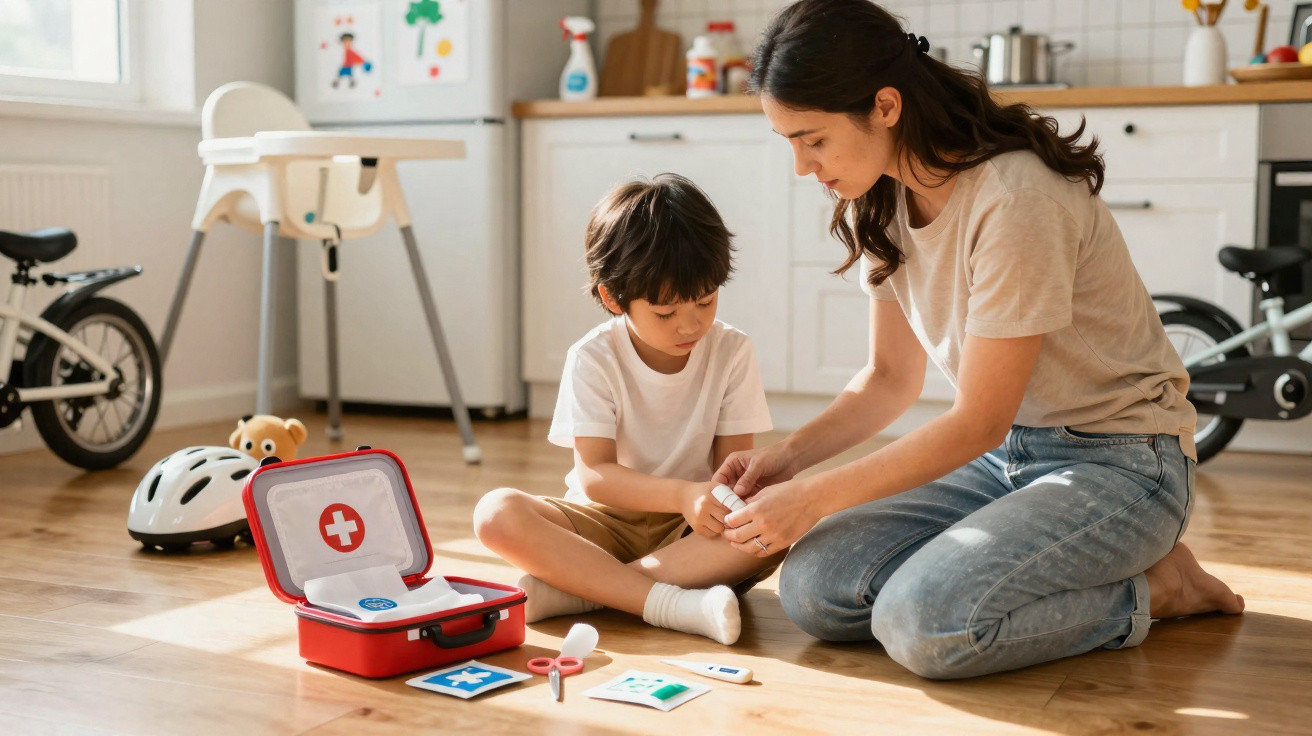
Parents, mothers and guardians of young children know that a few seconds of distraction can lead to accidents at home. Falls, cuts, choking and burns are among the most common childhood incidents, ranging from minor occurrences to more serious cases. For this reason, knowing how to respond in these situations is essential to keeping little ones safe.
According to Ityara Cristina Busetti, a lecturer on the Nursing course at Unopar College, carers should have at least a basic understanding of first aid. While this knowledge does not replace medical assistance, it can save lives until specialist help arrives. “In an emergency, staying calm is essential. The adult should assess what has happened, move the child away from danger and seek professional help whenever there are signs of severity,” she explains.
Here are 7 first aid situations that parents and guardians should know how to handle.
1. Choking
Choking can partly or completely obstruct the airway. If a child cannot breathe, cough or make sounds, immediate action is required and the emergency service must be called. Airway-clearance techniques differ according to the child’s age. Parents and guardians should therefore learn the correct methods for babies and children beforehand from qualified professionals.
2. Cuts and bleeding
For minor cuts, the first step is to clean your hands and apply direct pressure to the area using a clean cloth or gauze, which helps control the bleeding. Medical attention is needed if bleeding is heavy, does not stop after pressure is applied, or if the wound is deep.
3. Burns
In the event of a burn, cool the affected area under running water at room temperature. Applying ice, toothpaste, butter, coffee or other household substances to the skin is not advised. Extensive, deep or electrical burns, as well as those affecting sensitive areas such as the face and genitals, require medical assessment.
4. Falls and blows to the head
Following a fall, observe the child and check for loss of consciousness, repeated vomiting, changes in behaviour, excessive drowsiness, seizures or other symptoms. If warning signs are present or a more serious injury is suspected, the child should be assessed by a healthcare team. Where a spinal or neck injury is suspected, avoid moving them unnecessarily.
5. Nosebleeds
If the child has a nosebleed, they should remain seated and lean slightly forwards. Gently pinch the soft part of the nose for a few minutes. Tilting the head backwards is not recommended, as blood may be swallowed and cause discomfort.
6. Poisoning or swallowing substances
If a child swallows medicines, cleaning products or another potentially toxic substance, the responsible adult should not induce vomiting or offer food or drinks without professional advice. It is important to identify the product involved and seek guidance from a specialist service or emergency care, particularly if symptoms are present.
7. Seizure
During a seizure, the adult should protect the child from objects that could cause injury and, where possible, place them in a safe position once the movements have stopped. Do not put objects or fingers into the child’s mouth, or try to restrain their movements. Emergency care should be called if this is the first seizure, it lasts several minutes, breathing becomes difficult, or the child does not regain consciousness properly.
Knowing what not to do matters too
According to Ityara Cristina Busetti, one of the main mistakes in an emergency is turning to home remedies or carrying out procedures without the proper knowledge. “When trying to help, many people end up taking measures that can make the situation worse. Therefore, in addition to knowing first aid techniques, it is important to know when not to intervene and to seek specialist care,” she advises.
In emergencies, call 193 for the Fire Service, 192 for SAMU, the Mobile Emergency Care Service, and 0800-722-6001 for the Poison Helpline.
By Deiwerson Damasceno




Comments
No comments yet. Be the first to comment!
Leave a Comment