
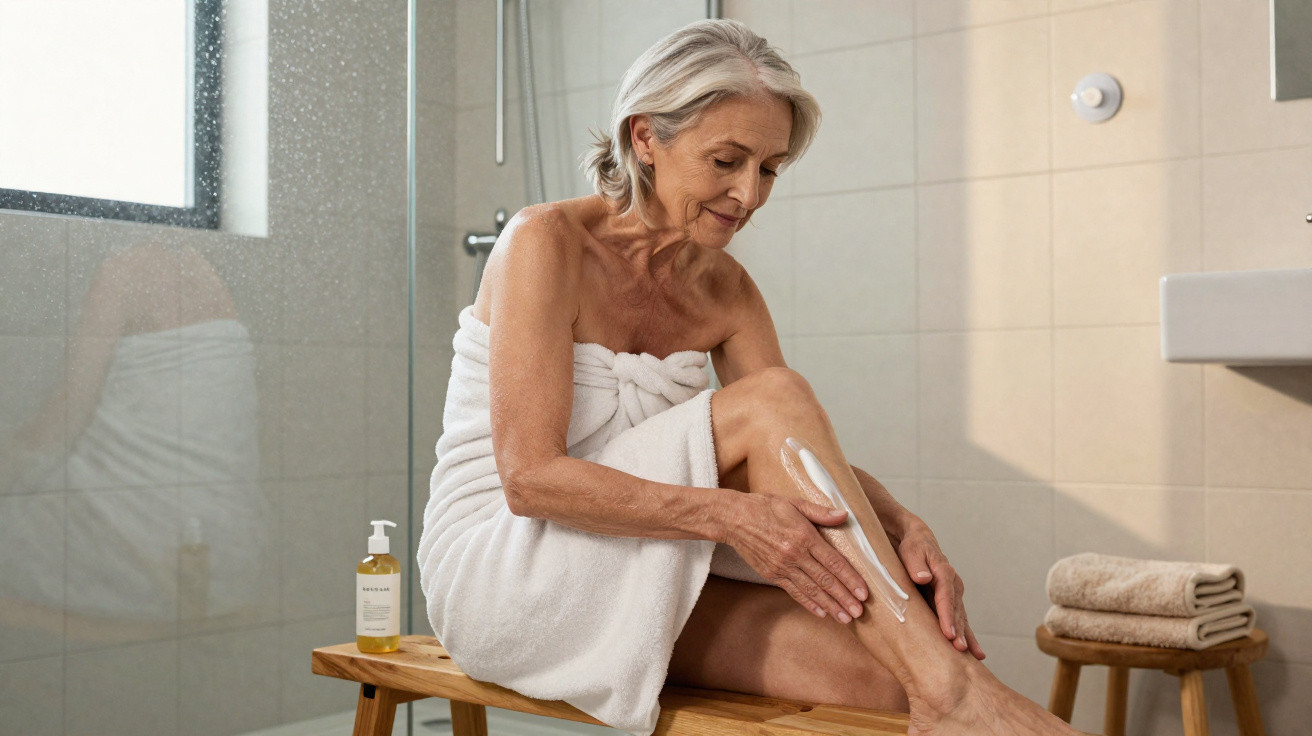
Many people stick to the same showering habits throughout their lives: a quick hot shower each morning, and sometimes even two showers a day. However, the body changes noticeably after 60, with the skin showing this particularly clearly. Specialists therefore advise reviewing your hygiene routine carefully – not for convenience, but for medical reasons.
Why skin becomes more sensitive after 60
As we age, skin becomes thinner. It loses elasticity, moisture and oils. The body produces less sebum, meaning fewer protective lipids that form a natural film over the skin. Among other things, this film prevents excessive water from evaporating from the skin.
Showering very frequently repeatedly disrupts this protective barrier. Water – particularly hot water – removes oils, while harsh shower gels intensify the effect. The result can be tight, rough skin that often itches and reacts excessively to everything from clothing and temperature changes to dry centrally heated air.
After 60, it is not insufficient hygiene but excessive hygiene that throws the skin out of balance.
Billions of microorganisms also live on the skin. This microbiome acts rather like a protective shield. Constant scrubbing, hot water and harsh surfactants can disturb this ecosystem. Redness and irritation may follow, alongside a greater risk of inflammation.
Excessive washing: the risks involved
An overly intensive shower routine is not harmless for older people. It can set off a whole series of problems.
- Cracked skin: Constant irritation can cause tiny, often invisible cracks in the outermost layer of skin.
- Itching: Dry skin may sting or itch, especially on the shins, arms and back.
- More pronounced wrinkles: As moisture levels fall, wrinkles can appear deeper and the skin may look less firm.
- Sensitivity to skincare products: Creams and shower gels that were previously well tolerated may suddenly sting or cause redness.
Products that produce plenty of foam, have a strong fragrance or claim to provide “intensive cleansing” can be especially stressful for older skin. Hands, elbows and knees, which already receive more wear, are often the first areas to develop rough, flaky patches.
Many people try to solve the issue by applying even more skincare products: rich creams, oil baths and specialist treatments. Yet if the underlying cause – washing too frequently – remains, they can end up going round in circles.
The ideal shower frequency after 60
For people over 60, dermatologists generally recommend a clear guideline: two to three full showers a week are usually sufficient. This maintains personal hygiene without placing unnecessary strain on the skin’s protective barrier.
Two to three showers a week plus daily partial washing – this keeps the body clean while protecting the skin.
This does not mean remaining “unwashed” on other days. Instead, targeted cleansing is a suitable alternative.
Daily partial washing: clean without a full shower
On days without a shower, it is enough to clean certain areas thoroughly:
- Face
- Armpits
- Intimate area
- Feet and between the toes
- Skin folds, such as beneath the breasts or around the groin
For this partial wash, lukewarm water and a mild cleansing product are enough. A soft flannel, or simply your hand, is preferable to a rough sponge. This protects the rest of the body while removing sweat and odour from the areas where they actually occur.
How to protect your skin in the shower
It is not only how often you shower that matters, but also how you shower. A few simple adjustments can greatly reduce skin irritation.
Adjust the water temperature and shower length
Lukewarm water, rather than hot water, is the ideal choice. Short showers are preferable to long ones. Ten minutes will usually be more than enough. The hotter and longer the shower, the more the skin swells and loses moisture.
Choose the right shower gel
Products labelled “for sensitive skin”, “pH skin-neutral” or “soap-free” are often good options. Even better are replenishing cleansing bars or shower oils, which foam less but leave lipids on the skin.
| Suitable for mature skin | Best avoided |
|---|---|
| Mild, pH-neutral cleansing syndets | Heavily fragranced products |
| Replenishing shower oils | Intensely foaming gels |
| Soap-free cleansers | Alcohol-containing products |
Only a small amount of cleanser is needed when lathering up. There is no need to soap the entire body thoroughly every time. Arms and legs, which are rarely prone to odour, can occasionally be rinsed with water alone.
Dry and moisturise correctly
After a shower, technique makes a particular difference: gently pat the skin dry with a soft towel instead of rubbing it. The rougher the towel, the greater the friction and the more moisture is lost.
A nourishing cream or lotion should be applied within three minutes of showering. Products containing the following are ideal:
- Ceramides
- Plant oils, such as almond, jojoba or evening primrose oil
- Glycerine or hyaluronic acid to bind moisture
Anyone who moisturises straight after showering “locks” the remaining moisture into the skin and supports its protective barrier.
For daytime, additional sun protection with an adequate SPF is advisable, even in winter. Mature skin is more sensitive to UV radiation, which can contribute not only to wrinkles but also to skin cancer.
When different rules may apply
The recommendation of two to three showers per week is a general guideline. Some circumstances may require adjustments. People who do physical work, sweat heavily or exercise regularly often feel more comfortable having additional showers. In that case, it is worth reducing their intensity: keep them very brief, use lukewarm water and apply only a small amount of product.
People with certain skin conditions – such as eczema, psoriasis or pronounced age-related itching – should ideally discuss their showering habits with a dermatologist. In some cases, showering even less often or using very specific cleansing substances may be appropriate.
Common misconceptions about hygiene in later life
Many older people worry that they will be seen as “unkempt” if they do not shower every day. This social pressure plays an important part. From a medical perspective, however, there is little justification for it – quite the opposite.
- Myth 1: Only showering every day is hygienic – false. Washing targeted areas of the body is enough for freshness and odour control.
- Myth 2: The more foam, the cleaner you get – false. Lots of foam usually indicates strong surfactants that strip oils from the skin.
- Myth 3: Stinging means it is “working” – dangerous. Stinging is a sign of irritation, not cleansing.
Those who let go of their own idea of what counts as “clean” and pay closer attention to how their skin responds will soon find a far more comfortable balance between care and protection.
Practical everyday tips for a skin-friendly routine
Small day-to-day changes can help, and they often take less effort than old habits.
- Schedule shower days, for example Monday, Wednesday and Saturday.
- Set the tap to a moderately warm temperature and leave it there.
- Put shower gel into a small dispensing bottle to prevent using too much.
- Keep moisturiser within reach in the bathroom, so applying it becomes a fixed part of your routine.
- Use a humidifier in winter to reduce the effects of dry centrally heated air.
If you are unsure, try a simple experiment: switch to no more than three showers a week for four weeks, and observe carefully how your skin feels. Many people report less tightness and itching after only a few days.
This seemingly small change to a hygiene routine can become a noticeable improvement in quality of life – particularly in later years, when healthy, resilient skin contributes greatly to overall wellbeing.






Comments
No comments yet. Be the first to comment!
Leave a Comment