
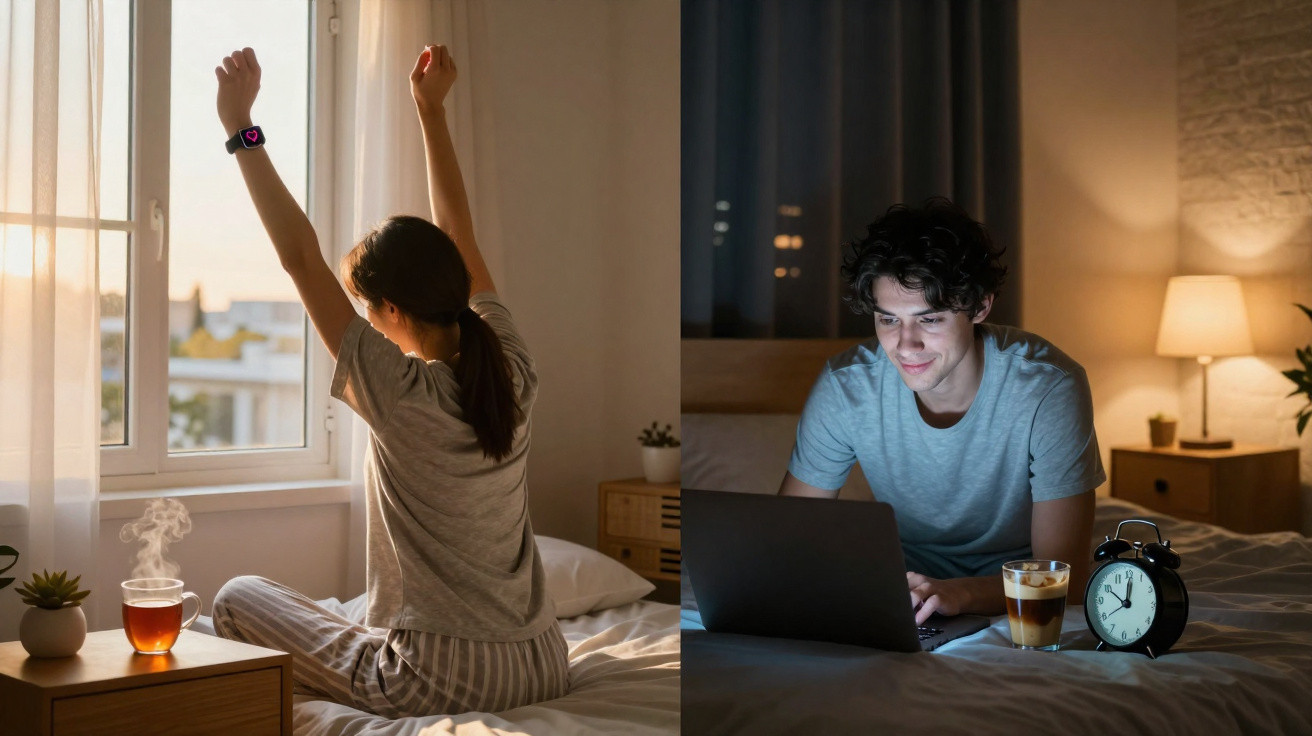
Behind the lifestyle argument, doctors recognise significant health implications.
The issue appears straightforward: is your body better served by rising at dawn or by working far beyond midnight? Fresh research into our “chronotype” – whether we are naturally larks or owls – indicates that the answer may have important implications for heart health, metabolism and long-term wellbeing.
The science behind larks and owls
Chronotype is the scientific term for the timing you naturally prefer for sleeping and being active. While some people are alert and efficient at 7am, others become most productive later in the evening and find early alarms difficult.
Scientists commonly use bird-based labels for these patterns:
- Larks: go to sleep early, rise early and function best in the morning.
- Owls: sleep late, wake late when their schedule permits and feel at their best in the evening or overnight.
- Intermediate types: fall between these extremes and have less pronounced preferences.
Research published in the Journal of the American Heart Association shows that these tendencies are more than personality traits. They relate to the body's internal clock and may affect blood sugar regulation, appetite, blood pressure and even medication responses.
People with an evening chronotype are more likely to live out of sync with their biological clock, and that misalignment can damage heart and metabolic health over time.
What the latest research found
The research examined adults categorised as morning, evening or intermediate types. Investigators considered their sleep schedules, working hours, lifestyle behaviours and several cardiometabolic indicators, including blood pressure, cholesterol and blood sugar.
A central finding was that people identifying as owls were more likely to experience what researchers term “circadian misalignment”: a disconnect between their natural body clock and the routine imposed by work, education or social commitments.
This mismatch was associated with:
- Less nutritious eating habits, including greater consumption of sugary and ultra-processed foods.
- Lower levels of regular exercise.
- A greater chance of smoking or heavier alcohol consumption in certain groups.
- Poorer cardiometabolic indicators, particularly blood sugar control and markers of insulin resistance.
The concern is not being a night owl by nature, but being an owl required to live in an early-bird society. This persistent form of “social jet lag” seems to place ongoing strain on the body.
Why disrupted sleep timing affects the heart
Most organs, including the heart, pancreas and liver, operate to a 24-hour cycle. If you keep a stable routine, hormones including cortisol, melatonin and insulin rise and fall at relatively predictable points in the day.
For evening types attempting to cope with early starts, this pattern is disturbed. They may sleep late, get up before their body is ready and then depend on caffeine and snacks to manage the day.
Chronic lack of sleep combined with an off-kilter body clock can raise blood pressure, trigger inflammation and push the body toward insulin resistance, a pathway that leads to type 2 diabetes and cardiovascular disease.
Large population studies have connected even relatively small but repeated disruptions to the circadian rhythm with increased rates of obesity, fatty liver disease and heart conditions.
Larks vs owls: who faces the greater health burden?
Who is at greater risk, then: someone awake at 5am or someone emailing at 1am? The latest findings suggest that evening types face higher risk, particularly if they stay up late during the working week before attempting to “catch up” on sleep at weekends.
| Chronotype | Typical pattern in a 9–5 society | Health concerns |
|---|---|---|
| Lark (morning type) | Gets up readily for work; commonly feels sleepy later in the evening. | Risk mainly increases when overall sleep is too short or interrupted. |
| Owl (evening type) | Finds early alarms difficult; sleeps too little on weekdays and longer at weekends. | More circadian misalignment, poorer metabolic markers and greater social jet lag. |
Morning types usually fit more naturally around conventional office hours. They are generally able to achieve something closer to their preferred sleep duration on workdays, meaning their social timetable is better matched to their body clock.
Owls, by comparison, are often made to rise several hours before their internal clock indicates that it is “morning”. Studies suggest that this sustained mistiming is the principal reason for the elevated cardiometabolic risk observed in evening types.
The impact of “social jet lag”
Social jet lag is the difference between biological time and social time. Someone whose body naturally favours sleeping from 1am to 9am, but whose job demands a 6am alarm, effectively lives with continual low-level jet lag.
Many owls try to make up their sleep deficit by having lie-ins at weekends. As a result, they switch between two time zones within the same week: “work time” and “free time”.
Living in two time zones every week confuses the internal clock in a similar way to repeatedly flying across several time zones, without ever fully adjusting.
Research has associated substantial social jet lag with a higher BMI, more frequent symptoms of depression, poorer work performance and increased markers of cardiovascular risk, irrespective of total sleep time.
Can a night owl turn into a lark?
Chronotype is partly genetic, and some individuals are naturally predisposed to feel more awake in the evening. Age is relevant too: teenagers and young adults often shift towards later schedules, whereas older adults commonly become earlier risers.
However, the body clock is not entirely fixed. Light exposure and behaviour can shift it to some extent.
- Bright morning light may move the internal clock forwards and encourage earlier sleep.
- Reducing light and limiting screens late in the evening can stop bedtimes drifting even later.
- Fixed mealtimes and regular waking hours can help keep the rhythm steady.
For dedicated night owls, becoming a model lark need not be the objective. A more achievable strategy is to reduce the mismatch between their natural timing and everyday responsibilities in steps of 30–60 minutes.
Practical measures for owls in an early-bird world
Evening chronotypes with unavoidable early starts can still reduce health risks by adapting their sleep- and light-related habits.
- Protect sleep duration: treat a minimum of seven hours as essential, even where this requires less late-night scrolling or streaming.
- Bring bedtime forward slowly: move lights-out by 15 minutes every few nights rather than trying to make an abrupt one-hour change.
- Get morning light: go outdoors or sit beside a bright window within an hour of getting up to help set your body clock.
- Set a “caffeine curfew”: avoid coffee and energy drinks for six to eight hours before the intended bedtime.
- Be mindful of late-night eating: substantial meals near midnight may impair blood sugar control and aggravate reflux.
Consistent, slightly earlier bedtimes combined with strong morning light can reduce social jet lag and ease the cardiometabolic burden seen in evening types.
Why chronotype matters to doctors
Cardiologists and endocrinologists are increasingly considering sleep timing when evaluating the risk of conditions including hypertension, diabetes and coronary artery disease.
Two people may sleep for the same number of hours yet have markedly different risk profiles if one is constantly living against their body clock. Some clinics now include chronotype, social jet lag and working schedules in standard assessments.
In time, timing could also influence treatment choices. For example, certain blood-pressure medicines may be more effective when taken at times that suit the patient's rhythms. Advice in weight-loss and diabetes programmes might likewise be adapted differently for owls and larks.
Key terms and everyday scenarios
Several terms occur repeatedly in this area of research:
- Circadian rhythm: the approximately 24-hour cycle controlling sleep, hormone release, body temperature and digestion.
- Chronotype: an individual's preferred timing for sleep and activity within that cycle.
- Circadian misalignment: a long-term mismatch between a person's real-world routine and their internal clock.
Consider two friends living in the same flat. One is a naturally owl-like nurse who works rotating night shifts, while the other is a naturally lark-like teacher. The nurse may experience both inadequate sleep and repeated clock changes, increasing metabolic stress. Despite early starts, the teacher may maintain a comparatively consistent routine that supports health, provided stress and screens do not gradually delay her bedtime.
Now consider a teenager with a pronounced evening chronotype who must start school at 7:30am. He falls asleep at midnight, wakes at 6am and sleeps until 11am at weekends. Over time, this routine may influence his grades, mood, weight and blood sugar. The answer is not simply “more discipline”, but better alignment of school timetables, light exposure and routines with biology.
Balancing personal preference with health risk
It is unlikely that society will be redesigned around every chronotype, but overlooking chronotype comes at a cost. Many self-described night owls may not appreciate that late nights combined with early commitments can place them at greater risk of heart and metabolic problems.
Getting up at 5am does not automatically make someone healthy, nor does working late at night inevitably condemn anyone to poor health. The important questions are: How closely does your timetable fit your biology? Do you get sufficient sleep? And are other risks – including poor diet, inactivity and heavy evening alcohol use – being added to an already strained body clock?






Comments
No comments yet. Be the first to comment!
Leave a Comment