

Each time, the balance is between comfort, routine and what your skin is still able to tolerate.
For many people over 65, bathing changes from an automatic daily habit into something that needs thought. The body still values feeling fresh and maintaining dignity, but skin may begin reacting to things that previously caused no trouble. Dermatologists now place less emphasis on “scrubbing properly” and more on preserving a delicate barrier, combining hygiene with comfort, and preventing the persistent itch that can keep you awake at night.
When skin matures: Why less can feel better
After the age of 65, the skin alters in several ways. Sebum production decreases, the outer layer becomes thinner, and the protective barrier is more easily disrupted. Hot water and foaming shower gels remove more than sweat and dirt: they also wash away the lipids that help keep the skin supple and intact.
For most older adults, showering two to three times a week is usually enough for both hygiene and skin comfort.
Dermatologists at European and US skin societies increasingly identify the same trend: people who have showered daily throughout their lives can develop dry areas on the shins, forearms and back, cracked skin around the ankles, or an ongoing need to scratch. The body may still want the sensation of being clean, while the skin quietly calls for a new approach.
This change is explained by biology. As we get older, the production of collagen and elastin slows. Skin becomes more permeable and more quickly affected by soap, heat and friction. Meanwhile, the microbiome – the layer of beneficial bacteria on the skin’s surface – does not respond well to harsh cleansing. Extended hot showers and powerful foaming products disturb this ecosystem while drying the stratum corneum, the outermost skin layer. This does not make the body “cleaner in a good way”; it simply leaves the skin more exposed.
A rigid daily wash of the whole body can create another problem: it places older skin in a continuing loop of irritation followed by repair. This cycle depletes moisture and may aggravate eczema, psoriasis and ordinary age-related dryness (xerosis). Reducing shower frequency often allows the barrier to recover, potentially meaning fewer creams, fewer appointments and fewer nights awake with itchy calves.
The “cat wash” concept: Fresh without a full shower
Targeted cleansing between full showers can work remarkably well. Many geriatric care teams follow a straightforward method: clean areas prone to sweat and odour, use mainly water elsewhere, and choose products and tools carefully.
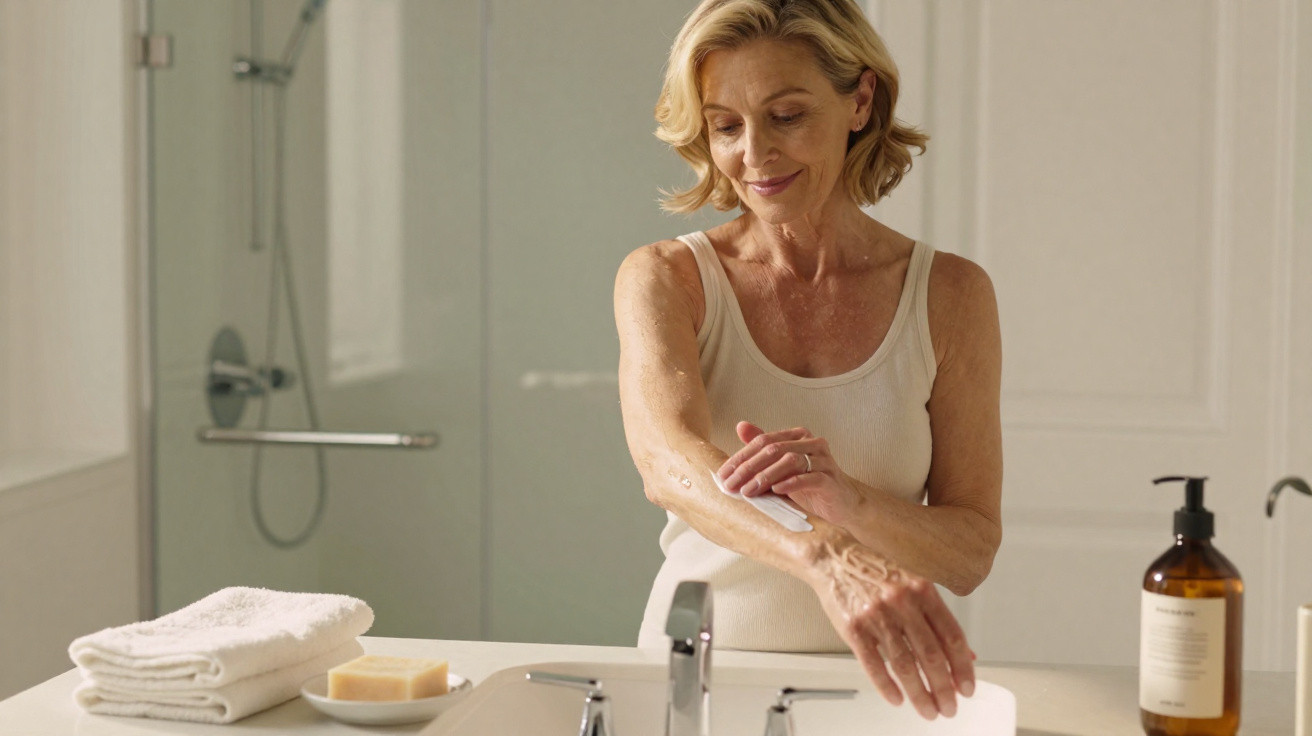
A quick “cat wash” of armpits, groin, feet and skin folds can replace a full shower on many days.
- Use a freshly washed, soft flannel or cotton pad.
- Use lukewarm rather than very hot water.
- Apply a gentle, fragrance-free cleanser only to areas that need it.
- Rinse thoroughly and pat the skin dry, particularly in folds.
- Apply a light moisturiser to dry patches afterwards.
This method manages odour, supports privacy and dignity, and avoids soaking fragile skin every day. Many older adults find that, after following this pattern for two or three weeks, feelings of tightness and irritation lessen and their skin becomes more settled.
A practical showering routine after 65: Short, lukewarm, gentle
Specialists generally reduce a skin-friendly shower routine for older people to three principles: short, lukewarm and mild.
| Aspect | Recommended choice after 65 |
|---|---|
| Frequency | 2–3 full showers per week, with in-between washing at the sink |
| Water temperature | Lukewarm, slightly below body temperature |
| Duration | About 5–7 minutes |
| Cleansing product | pH-balanced, fragrance-free, lipid-replenishing wash or syndet |
| Areas with cleanser | Armpits, groin, feet, buttocks; rest mostly water |
| Aftercare | Pat dry, then moisturise on slightly damp skin |
There is rarely a need to soap the entire body every time. Unless they are visibly dirty, arms and legs generally need water only. Attention should remain on places where sweat and bacteria build up. Scented exfoliators and abrasive sponges cause mechanical damage as well as chemical irritation, which is why geriatric dermatologists commonly recommend avoiding them.
Retire rough loofahs and old sponges; they scratch the skin and can harbour bacteria over time.
Once you leave the shower, dab the skin dry with a soft towel instead of rubbing it. Applying a cream or lotion containing lipids and humectants, such as glycerin or low concentrations of urea, while the skin remains slightly damp helps retain water. For lasting comfort, this matters more than spending another minute in the shower.
Adjusting the rhythm to seasons and health conditions
No single bathing timetable suits everybody over 65. Your health, medicines and lifestyle all have an influence. A person with diabetes, for example, may have drier skin that is more susceptible to infection and should dry carefully between the toes. Someone living with incontinence may need more focused washing around the groin while still reducing full-body showers. People who swim regularly in chlorinated water may benefit from an extra rinse, but this can remain brief and gentle.
The season matters as well. Winter heating dries the skin more rapidly, meaning that one or two full showers a week followed by generous moisturising often works best, alongside “cat washes” on other days. During summer, heat and perspiration may require more frequent refreshing at the sink. Even so, if clothes are changed regularly, a mild full-body shower every second or third day will usually be enough.
More than hygiene: Showering as a source of calm and structure
For people over 65, showering is seldom only about cleanliness. It can also be linked to structure, self-image and independence. Many older people see a morning shower as a mental reset: a dividing line between nightwear and the day ahead, or between feeling slow and feeling prepared.
The goal shifts from “perfectly scrubbed” to “comfortable in my own skin, today, with the body I have now”.
When ageing brings reduced mobility or concerns about falling, showering can become stressful rather than enjoyable. Altering both the setup and the frequency may help rebuild confidence. A solid shower stool, handheld showerhead and non-slip mats can ease anxiety. Keeping showers brief and planned for certain days, with quick washes at the sink in between, makes the task more predictable and manageable.
Families and carers may be concerned about odour and encourage daily showers. Research from geriatric care environments shows that clean clothing, regular changes of underwear and focused washing can control odour as effectively as a daily full shower, while causing fewer skin issues. Discussions centred on comfort rather than “rules” are often more likely to produce workable routines and cooperation.
Gut feeling and mental wellbeing
“Gut feeling” may appear to be a metaphor, but there is a genuine connection. Persistent itching, tight skin and minor injuries increase stress and disrupt sleep, which can in turn affect appetite and digestion. Older adults whose skin feels calmer often say they sleep better and feel more relaxed. That internal sense of calm influences how someone assesses their own cleanliness and physical comfort.
At the same time, gentle contact with water can stimulate circulation and improve mood. A brief lukewarm shower followed by a few minutes of rest may calm the nerves without placing the system under strain. Switching between days with a full shower and days with targeted washing often offers a good balance between this emotional benefit and protecting the skin barrier.
Extra tips: When to seek advice and what to watch for
Itching and red patches are not always caused by showering too often. Some medicines, kidney or liver disease, thyroid conditions and blood cancers may also lead to persistent itchiness. A GP or dermatologist should check sudden skin changes, skin that bleeds easily, or symptoms that wake you repeatedly over several nights. Taking along a list of shower products can help them identify whether fragrances or preservatives could be causing the reaction.
A monthly home “check-up” may also be useful. Following a shower, stand in bright light and inspect your legs, arms, torso and back using a mirror or with help from a partner. Check for new moles, spots that do not heal or thick crusts, particularly in areas exposed to the sun. Shower time can therefore become a regular opportunity to spot skin cancers early, improving treatment options.
Finally, treat bathing as a flexible toolkit rather than a fixed rule. After gardening or taking a long walk in hot weather, a full lukewarm shower may feel appropriate. On a quiet day indoors, a careful wash at the sink may be sufficient. Notice how your skin feels 12 hours later – whether it is dry, calm, tight or pleasantly soft – as this offers better guidance than any strict schedule.
This continuing conversation with your skin, supported by small practical changes, will often do more for health, sleep and a settled gut feeling than any costly cream or complicated ten-step routine.





Comments
No comments yet. Be the first to comment!
Leave a Comment